Rutabagas
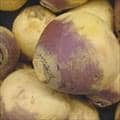
Rutabagas (Brassica napus) aka: swede, yellow turnips, Swedish turnips, are oblate oval shaped vegetables with a thin skin that is purple on the top and yellow on the bottom. The inner flesh is a pale orange. Rutabagas will sometimes be found with their greens (leaves) attached at the stem, and these leaves can be eaten.
Health benefits of Rutabagas
- Increased Protection from Bacterial and Viral Infections
- Increased Immune Function
- Reduced Cancer Risk
- Reduced Risk of Colon Cancer
- Protection Against Heart Disease
- Regulation of Blood Sugar and Insulin Dependence
- Slowing the progression of AIDS
- Slowing Aging
- DNA Repair and Protection
- Protection Against Dementia
- Alleviation of Cardiovascular Disease
- Alleviation of Hypertension (High Blood Pressure)
- Promoted Eye Health
- Alzheimer's Protection
- Osteoporosis Protection
- Stroke Prevention
- Reduced Risk of Type II Diabetes
- Reduced Frequency of Migraine Headaches
- Alleviation of Premenstrual Syndrome (PMS)
- Antioxidant Protection
- Prevention of Epileptic Seizures
- Alleviation of the Common Cold
- Prevention of Alopecia (Spot Baldness)
- Alleviation of Inflammation
Some of these health benefits come from nutrients concentrated in this food, and may not be effects of the food itself.
How to choose Rutabagas
Look for firm rutabagas with few marks or discolorations. If the rutabagas feel soft it is a sign that they are old. If the stems are still attached check them for signs of wilting.
How to store Rutabagas
Rutabagas can be kept in a cool dark place (or a refrigerator) and will last for 2-3 weeks.
Climate and origin
Rutabagas are thought to have originated in Europe as a cross between a cabbage and a turnip, and now grow in temperate climates throughout the world.
Taste
Rutabagas have a faintly sharp taste and crisp texture when raw, softening when cooked.
Miscellaneous information
Germans lived on a diet rutabagas during World War I due to a shortage of other staple foods.
Similar tasting produce
Nutrition facts
| Nutrition Facts | |||
|---|---|---|---|
| Serving Size | |||
| 100 grams (100g) | |||
| Calories | 37 | ||
| % Daily Value * | |||
| Total Fat 0.16g | 0% | ||
| Saturated Fat 0.03g | 0% | ||
| Trans Fat 0g | |||
| Cholesterol 0mg | 0% | ||
| Sodium 12mg | 1% | ||
| Total Carbohydrate 8.6g | 3% | ||
| Dietary Fiber 2.3g | 8% | ||
| Total Sugars 4.5g | 9% | ||
| Includes --g Added Sugars | --% | ||
| Protein 1.1g | 2% | ||
| Vitamin C 25mg | 28% | ||
| Vitamin D 0mcg | 0% | ||
| Iron 0.44mg | 2% | ||
| Calcium 43mg | 3% | ||
| Potassium 305mg | 6% | ||
| Phosphorus 53mg | 4% | ||
| *The % Daily Value (DV) tells you how much a nutrient in a serving of food contributes to a daily diet. 2,000 calories a day is used for general nutrition advice. | |||